









More about: Catacombs of St. Callixtus vs Catacombs of the Capuchins
Two of the most striking sites you’ll come across in Rome during your trip are the Catacombs of Saint Callixtus and the Crypt of the Capuchin Friars. These two Christian burial sites attract many visitors with their history, aesthetics and philosophical significance, and are sure to leave a lasting impression.
If you have plenty of time and money to spare, ideally you should visit both sites as they are amazing, but if not, don’t worry, because to help you with the difficult task of choosing which place to visit, below we compare the Catacombs of Saint Callixtus and the Crypt of the Capuchin Friars.
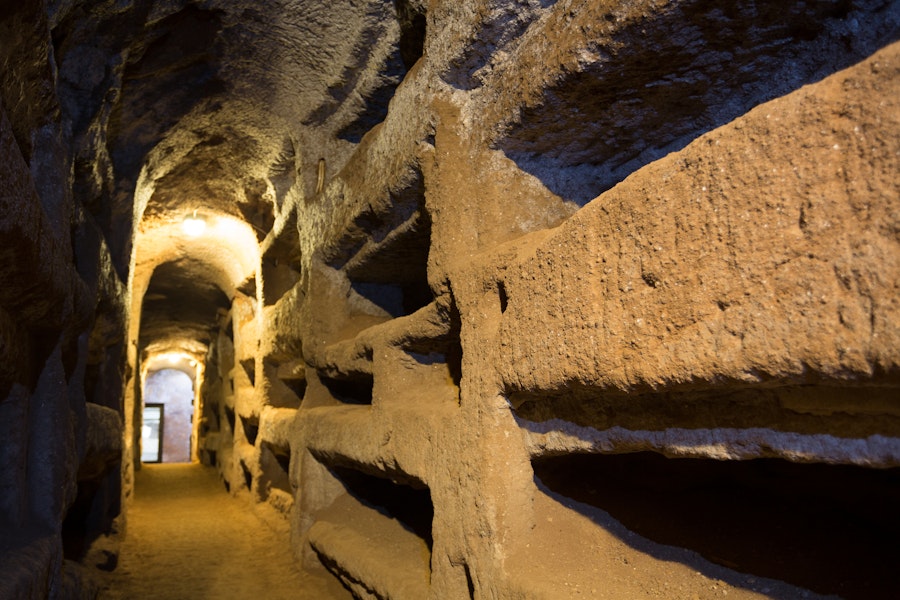
Rome Catacombs of Callixtus Guided Tour
Book a guided tour in your language
The perfect activity if you want to learn all about the history of one of Rome’s most fascinating catacombs from an expert guide.
By booking this guided tour of the Catacombs of San Callixtus in Rome, you’ll discover the history of all the frescoes, tunnels and tombs they contain, leaving no stone unturned, as you’ll be accompanied by an expert guide who speaks your language and can answer all your questions. And best of all, your tour will be in a small group.
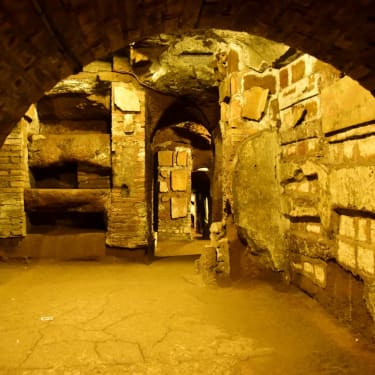
These catacombs are the oldest and most important in the Italian capital, as they house the tombs of the early Christians. For 40 minutes, you’ll immerse yourself in a network of tunnels stretching some 20 kilometres in length, where you can admire sites such as the Crypt of Saint Cecilia, the Crypt of the Popes and the Cubiculum of the Sacraments, amongst other places.
Recommended if... you’re passionate about history and don’t want to miss out on a Rome essential, whilst also skipping the queues.
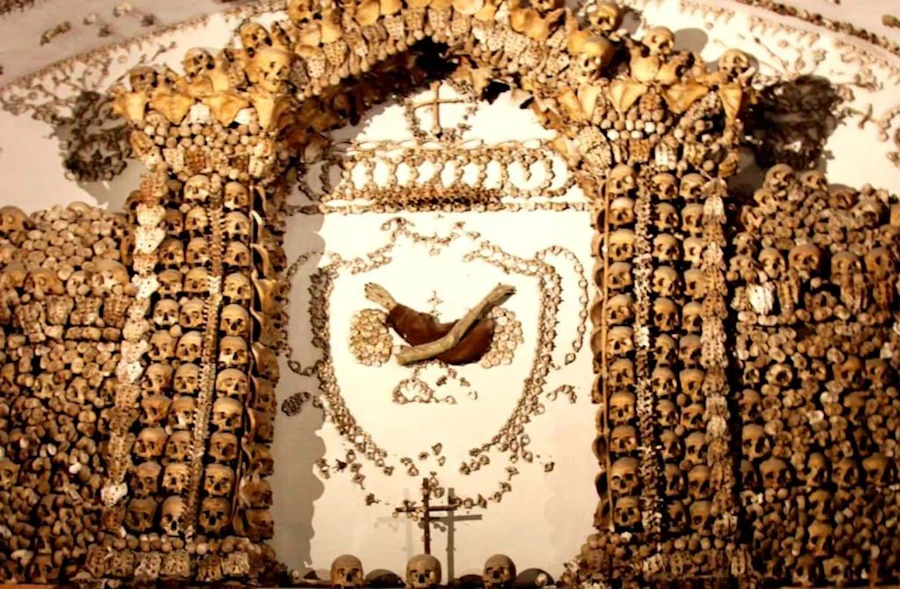
Guided tour of the Crypt of the Capuchins and the Catacombs in Rome
Book your activity with instant confirmation
The best option if you want to explore the crypt beneath the Church of Santa María de la Concepción in small groups and avoid having to wait ages in the queues at the entrance.
The guided tour of the Capuchin Crypt is a very popular activity among tourists, and this option with immediate booking, no queues and small groups will allow you to secure your entry and enjoy this unique place in the best possible way.
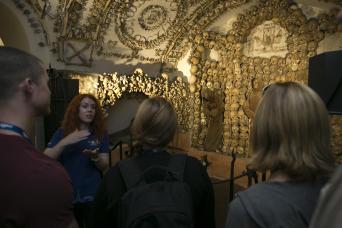
The experience lasts approximately one hour and, of course, you’ll be accompanied by an expert guide. What’s more, you’ll also have access to the Capuchin Crypt Museum, as this is included in the price.
Recommended if... you want to delve deeper into the secrets of the Eternal City’s underground.
What are the Catacombs of Saint Callixtus and the Capuchin Crypt in Rome like?
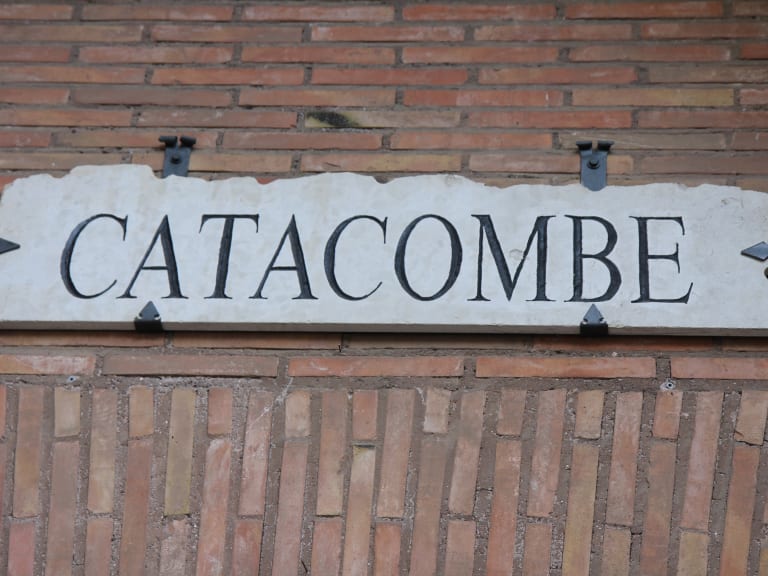
Although both sites were intended to house the mortal remains of Christians in Rome, the origins of the Catacombs of Saint Callixtus and the Capuchin Crypt stem from different motivations.
The catacombs of Rome are underground cemeteries that emerged in the first half of the 2nd century AD, where the early Christians buried their dead when Roman law did not permit burial within the city. Unlike the Roman pagan rite, Christians did not cremate the deceased but buried them. To address the high cost of land and the space issues that soon arose, they decided to excavate these enormous cemeteries underground.
Features of the Catacombs of Saint Callixtus
The Catacombs of Saint Callixtus are famous for being the largest in Rome (they feature 20 kilometres of tunnels spread across several levels) and for housing the Papal Crypt (which once held the tombs of several popes from the 2nd to the 4th centuries AD).
However, you will not find any ossuaries or human remains in the Catacombs of Saint Callixtus today, as during the barbarian invasions of the 8th century AD, the catacombs were extensively looted and the Popes decided to transfer the relics preserved there to various churches throughout the city.
Features of the Capuchin Crypt
To see remains, you will need to visit the Crypt of the Capuchin Friars in the Church of Santa Maria della Concezione in Rome, which was built at the behest of Pope Urban VIII in honour of his brother Antonio Barberini, who was a member of the Capuchin Order.
What will you see in the Catacombs of Saint Callixtus and the Capuchin Crypt?

The Catacombs of Saint Callixtus
Since the 5th century AD, when Christians returned to burying their dead above ground, the catacombs of Rome were abandoned, allowing them to remain virtually intact until they were discovered in the 19th century by the archaeologist Giovanni Battista de Rossi, thus becoming a very important and fascinating testimony to antiquity.
Those of Saint Callixtus are the most visited and extensive in Rome, even more so than the Vatican Catacombs. There you can see:
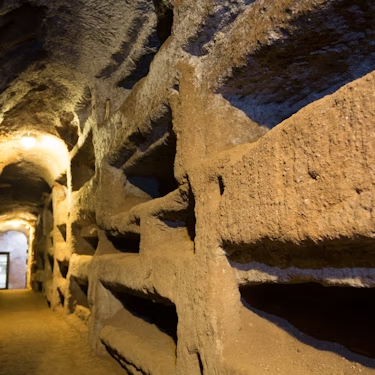
- A multitude of niches where the burials of Christians, many of them martyrs, took place. Over half a million tombs have been identified, and they have only been partially explored.
- The tombs of the early Popes, which contained the relics of several martyred pontiffs from the 3rd century AD.
- The tomb of Saint Cecilia, whose remains now rest in the church of Santa Cecilia in Trastevere.
- A large number of frescoes, inscriptions and sculptures, all imbued with profound symbolism linked to early Christianity, such as the Chi-Rho, the letters Alpha and Omega, and the anchor cross.
The Crypt of the Capuchin Friars
Before entering the Crypt of the Capuchin Friars, you will first visit the Museum of the Convent of the Immaculate Conception, which won’t take long as it consists of just a few rooms. Here, you will not only learn about the history of the Capuchin Order, but you will also be able to admire the painting “Saint Francis of Assisi in Meditation” which the artist Caravaggio created for this convent.
Afterwards, you’ll have time to see the famous Crypt of the Capuchin Friars, a place that will leave you speechless and which may well remind you of the Capela dos Ossos in Évora (Portugal) or the Gothic Church of Sedlec (Czech Republic). This is what it contains:
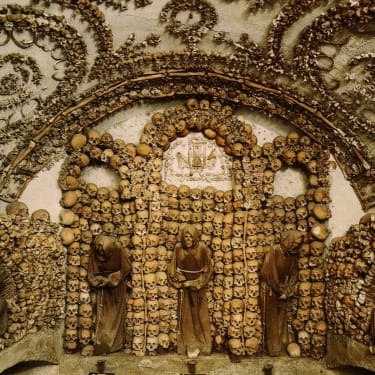
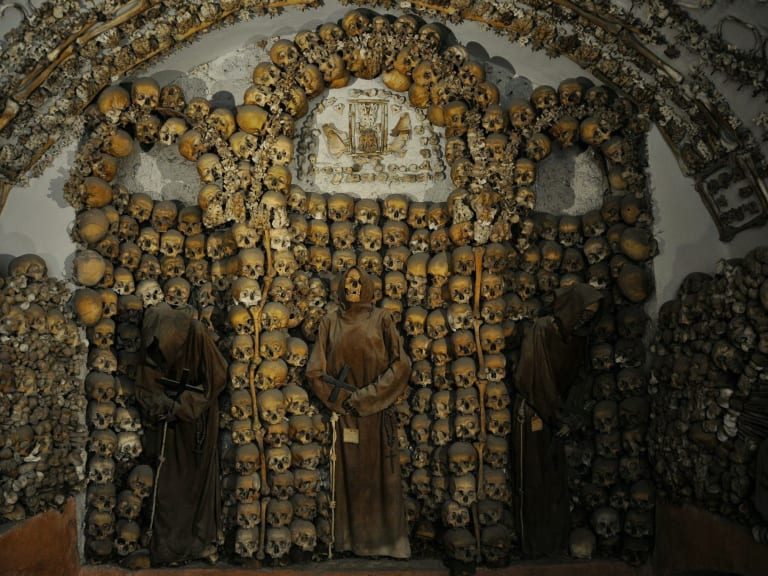
- Chapels decorated with the bones of more than 4,000 monks who died between the 16th and 19th centuries, named after the bones most abundant in each one (skulls, femurs, pelvises, tibias, etc.).
- Complete skeletons of friars dressed in their habits.
- Garlands, rosettes, stars and even a clock made from bones.
Compare ticket prices
If you want to see them separately, from €15 you can get a general admission ticket to explore the Catacombs of San Calixto, whilst from €59 you can get a general admission ticket to visit the Capuchin Crypt, which is located next to the Museum of the Convent of the Immaculate Conception and alongside other underground tunnels.
Are there any discounts or reduced prices?
That’s right! At the Catacombs of San Calixto, there are reduced-price tickets starting from €12 for certain groups, allowing you to save a little on your visit. This small discount applies to:
- Children aged 7 to 16
- Student groups
- Students up to the age of 25 studying archaeology, art history, cultural heritage and architecture who can provide the relevant certification.
- Priests, members of religious orders, seminarians and novices who present the appropriate certification.
- Entry is free for children under 6 and for disabled people (>74%) and their carer.
In the case of the Crypt of the Capuchin Friars, the website of the Church of Santa María de la Concepción does not specify who is eligible, but it does mention that reduced-price tickets are available for individual and group visitors.
Can you take a guided tour?
The catacombs of Rome, and specifically those of San Calixto, can only be explored as part of an organised tour with an expert guide, as you will be venturing deep into the earth to explore the tunnels that make up this ancient underground cemetery, which are rather narrow and dark.
From €15, you can find options on Hellotickets to explore the Catacombs of Saint Callixtus, but there is also the option of taking a guided tour that shows you both sites; on the website, you can also find activities that combine a visit to the Capuchin Crypt with other Catacombs of Rome from €58.
In this way, in just a few hours you can visit two different tourist attractions to learn about the funeral customs of the early Christians and their secret places of worship, as well as the symbolism behind the decoration adorning both the catacombs and the crypt.
We compare opening times

Catacombs of Saint Callixtus
The Catacombs of Saint Callixtus are open Monday to Sunday from 9 am to 12 pm and from 2 pm to 5 pm. They are closed on Wednesdays, New Year’s Day (1 January), Easter Sunday and Christmas Day (25 December).
Guided tours take place every half hour and last approximately 40 minutes. In the morning, the last guided tour starts at 12 pm, whilst in the afternoon it starts at 5 pm (on Maundy Thursday at 4.30 pm).
Crypt of the Capuchin Friars
The Crypt of the Capuchin Friars is open daily from 10 am to 7 pm, with last admission at 6.30 pm.
It is closed on Easter Sunday, on 2 November at 3 pm, on Christmas Eve (24 December) at 2.30 pm, on Christmas Day (25 December), on New Year’s Eve (31 December) at 2.30 pm and on New Year’s Day (1 January).
How busy are both places?

The Catacombs of Rome are one of the city’s finest monuments. As it is such a popular spot, there are always plenty of visitors, so I recommend visiting early in the morning when it is less crowded. However, the tour inside is not conducted in very large groups.
As for the Crypt of the Capuchin Friars, the Church of Santa Maria della Concezione is not one of Rome’s best-known churches, so there are usually fewer tourists visiting it compared to the Catacombs of San Callixtus.
Where are they located?
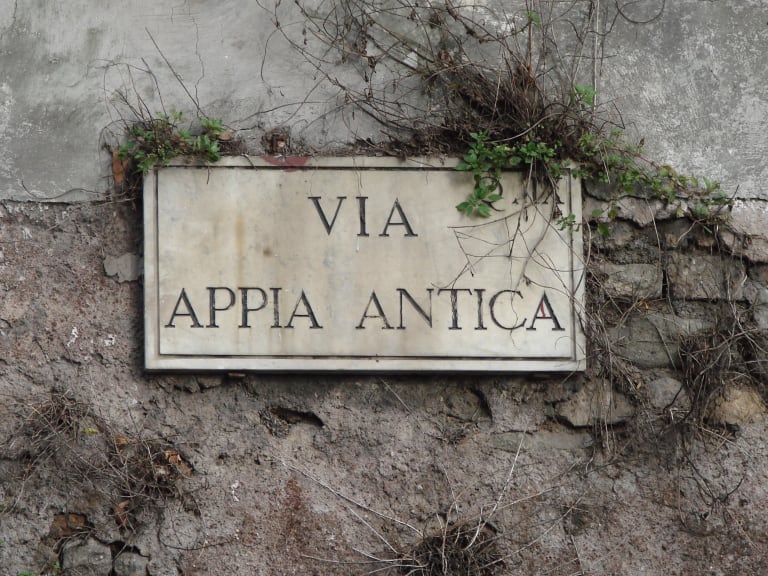
The Catacombs of Saint Callixtus are located at Via Appia Antica, 126, which was one of the most important roads of the Roman Empire, and can be reached by taking bus 118 near the Colosseo metro station.
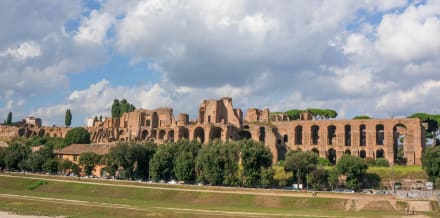
In the vicinity of the Via Appia there are remains of villas, mausoleums, catacombs and even a circus. Strolling along it is like taking a journey back in time to Ancient Rome.
The Crypt of the Capuchin Friars, on the other hand, is located at 27 Via Vittorio Veneto, just a few minutes’ walk from the Trevi Fountain and the Spanish Steps. To get there, you can take a stroll or take the metro (Line A, Barberini station).
Where to eat near the Catacombs and the Crypt?

A trip to visit the Catacombs of San Callixtus or the Capuchin Crypt is sure to work up an appetite. Fortunately, there are several restaurants in the vicinity of both tourist attractions where you can refuel. Here are a few examples:
Catacombs of Saint Callixtus
- Tuarua (Via delle Sette Chiese 300): a café perfect for a quick bite to eat, such as a sandwich and a coffee.
- Cecilia Metella (Via Appia Antica 125–129): a very pleasant restaurant where you can enjoy a delicious plate of Italian pasta. It has a lovely garden where you can relax outdoors on sunny days. Good value for money.
- Trattoria Cotto e Magnato (Via Cornelio Magni, 27, Eur Colombo area): a family-run trattoria where you can enjoy the best home-style Italian cuisine. Friendly and efficient service.
Crypt of the Capuchin Friars
- Ristorante Ciao Bella (Via Vittorio Veneto 12): a pleasant place to eat in the centre of Rome. Good service and the wood-fired pizzas are delicious.
- Il Gazebo (Via Veneto, 24 Hotel Imperiale): the menu is simple but of superb quality. The pasta and veal are the restaurant’s best dishes. Attentive service.
- Fraschetteria Giampiccolo (Via Dei Cappuccini 26): a cosy, quiet restaurant where you can enjoy delicious fresh pasta and a rich tiramisu for dessert. Quick service.
What photos will you take inside?

Unfortunately, photography and filming are not permitted in the Catacombs of Saint Callixtus or the Crypt of the Capuchin Friars.
It’s a shame because you’d surely like to have a memento of the experience, but looking on the bright side, this will allow you to immerse yourself fully in the experience, paying closer attention to all the details of the spaces you see during the tour and to the guide’s explanations, which are very interesting. And not so much on finding a good angle or enough light to take a good photograph.
Tips for visiting this type of site

Avoid the catacombs if you’re claustrophobic
The Catacombs of San Calixto are underground and the tunnels that make them up are extensive, dark and narrow.
Although you’ll be accompanied by a guide and there’s enough space to move around calmly and without any problems, if you’re prone to claustrophobia in confined spaces, before buying tickets, consider whether this is the most suitable activity for you.
Prepare yourself for what you’ll see in the Capuchin Crypt
Due to the unusual decoration of the chapels in the Capuchin Crypt, this place can be quite a shock. If you are a very sensitive person, my advice is to prepare yourself a little beforehand for what you are going to see there and to consider whether the visit is suitable for children, as the scene is a bit gruesome.
Follow the dress code
When visiting the Catacombs of San Calixto or the Capuchin Crypt, remember to wear clothing that covers your shoulders and knees to gain entry, as these are spaces with a sacred significance for the Catholic faith.
In the catacombs, the temperature is around 16°C and humidity is high, so it is advisable to wear a warm top to keep out the chill during the tour.
Wear comfortable shoes
The floor of the catacombs is not always level, so wearing comfortable shoes that provide good support for your feet is essential to make the most of your visit.
Don’t bring a camera
As it is forbidden to take photos or videos in the catacombs and the crypt, there’s no need to bring your camera with you. That’s less weight in your rucksack!
Which one to choose depending on your travel plans

If you have enough time during your trip to Rome, my advice is to visit both sites, as they are very different places that will surprise you with both their history and their aesthetics. Otherwise, it might be a good idea to focus on your preferences and look at your travel plan to help you decide. Here are some tips!
- If it’s your first time in Rome: the Catacombs of Saint Callixtus
- If you’ve been to the city before: the Crypt of the Capuchin Friars
- If you want a quiet visit: the Catacombs of Saint Callixtus
- If you’re short on time: the Crypt of the Capuchin Friars
- If you’re on a tight budget: the Catacombs of Saint Callixtus
- If you don’t want to get tired: the Crypt of the Capuchin Friars
- If you’re interested in the history of Rome and Christianity: the Catacombs of Saint Callixtus
- If you’re interested in unique and unusual visits: the Crypt of the Capuchin Friars