

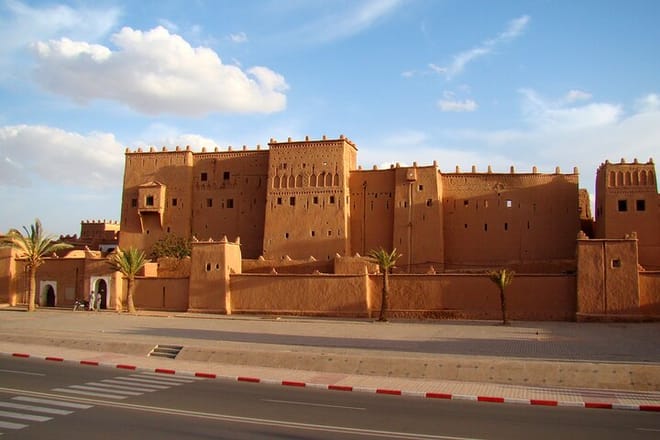




More about: Marrakech in 3 Days: tours, monuments and visits not to miss a thing
Three days are enough to see and do everything there is to see and do in Marrakech, as well as taking a half-day excursion. Strolling through its wonderful gardens, the labyrinthine alleys of its Medina, its souks and, of course, Jamaa el Fna Square, travellers will feel completely intoxicated by this city, which is a World Heritage Site in the cultural space category.
Day 1: from Jamaa el Fna Square to the medina of Marrakech

The best option for exploring the medina, the souk and other attractions of old Marrakech is to book a guided tour of Marrakech. This way, you will discover all the secrets of this exotic city and open your mind to all the new experiences you are about to have.
In addition, visiting Marrakech can make some people feel uncertain. Although in my experience, the most problematic thing you may encounter is an overly insistent salesperson or a fake guide trying to get you to hire them, booking a guided tour in advance and keeping in mind some safety tips for Marrakech can be two good ways to alleviate that fear.
Explore the Medina
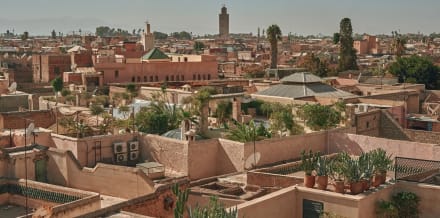
There is no better way to start your visit to Marrakech than by exploring the Medina. This old part of the city has around 1,000 years of history and is made up of a large number of streets, most of which are narrow, making it very easy to get lost.
When you're walking through these streets, you may feel a little overwhelmed by the large number of people and how easy it is to lose your sense of direction. That's why booking a tour of the Medina of Marrakech can be a great option to get straight to the point and be accompanied by an expert guide who will make the walk easier.
Fortunately, the medina of Marrakech has some places where you can relax. Among them is the so-called Secret Garden, an elegant palace located in the centre of the old city. Don't hesitate to stop here to take a break while drinking some mint tea in the café.
Medersa (or Madrasa) Ben Youssef, another must-see in the medina
Another essential attraction in the medina is the Medersa Ben Youssef, an ancient Islamic school that once had 900 students. There is an entrance fee, but the peaceful atmosphere inside makes it well worth a visit.
Those familiar with the Alhambra in Granada will find some similarities with this old school, especially in its courtyard decorated with a fountain in the centre. It is also interesting to note the tiles on the walls, which add to the beauty of the complex.
Stroll and shop in the souk
Still in the medina, on this first day I suggest you take a stroll through the souk to buy some gifts. The crowds are even bigger in these areas than in the rest of the old city, and shoppers mingle with sellers and the stalls displaying the merchandise. Therefore, I recommend booking a guided tour of the Marrakech souk to avoid any potential inconveniences.
In reality, there are several different souks, as there are clearly different areas depending on the type of product being sold:
- Fabrics.
- Tin products.
- Food.
- Sale of spices, medicinal herbs and basketry.
Remember that to buy, you must haggle with the seller until you reach an agreement on the price!
First visit to Jamaa el Fna
Of course, on this first day, you can't miss the most iconic place in the city: Jamaa el Fna Square.
On this first visit, you will see that this square represents the spirit of the city. Here you will find everything from fresh fruit juice stalls to storytellers, not to mention jugglers and snake charmers.
Eat near the square
Around Jamaa el Fna Square, you will find several restaurants where you can eat and recharge your batteries. This will give you a taste of Moroccan cuisine, although if you are really interested, I recommend booking a gastronomic tour dedicated to the country's cuisine.
Otherwise, I can make some recommendations:
- El Dar Cherifa, which overlooks the square.
- Chez Ben Driss, where you can enjoy good traditional dishes at a reasonable price for the area.
Visit the Dar Si Said Museum
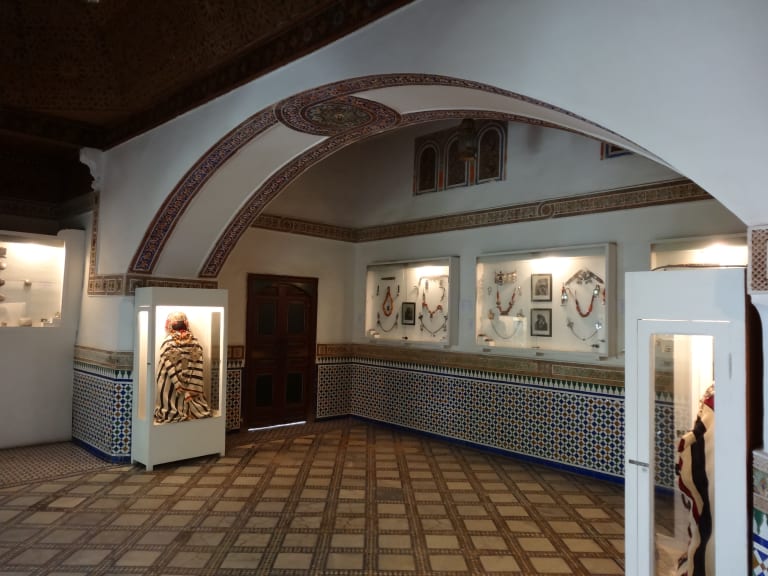
Returning to the interior of the medina, the next destination will be the Dar Si Said Museum. In addition to its collection, which includes textiles, carpets and objects belonging to Berber culture, the building itself is notable for its architecture.
The museum is located in a 19th-century palace and features a typical Moroccan courtyard, as well as beautifully decorated wooden doors.
Koutoubia Mosque
The most important mosque in Marrakech is the Koutoubia (meaning "of the booksellers" in Arabic). Unfortunately, its interior is off-limits to non-Muslims, so you will have to content yourself with admiring its beautiful architecture, decoration and, of course, its famous minaret.
The latter, some 70 metres high, is immediately reminiscent of the Giralda in Seville and remains the highest point in the city.
Sunset and mint tea on a terrace overlooking Jamaa el Fna
After such a busy day, the best thing to do at this point is to return to the Jamaa el Fna area and look for one of the terraces overlooking the square.
Here you can have a coffee or mint tea while enjoying the sunset and watching the atmosphere in the square change. I recommend two of these places: Café Glacier and L'Adresse Jemaa Al Fna.
Return to Jamaa el Fna for dinner
Jamaa el Fna transforms as evening falls. The vendors who populate it during the day are replaced by food stalls. It is undoubtedly a good place to have dinner at very affordable prices.
However, competition between the open-air restaurants that set up shop here is fierce, and it is not uncommon for them to try to attract you in a way that can be overly insistent. A great tip for your trip to Marrakech is to stay calm and choose the place that most appeals to you.
Day 2: excursion to the Atlas Mountains
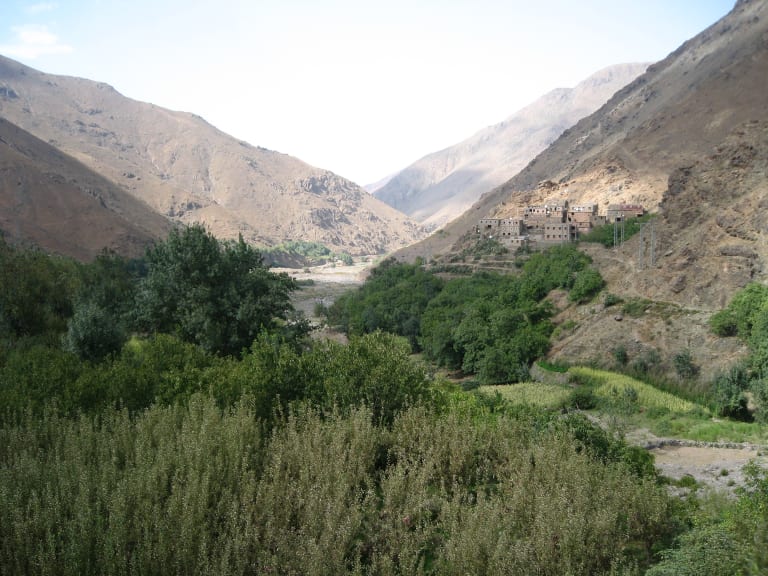
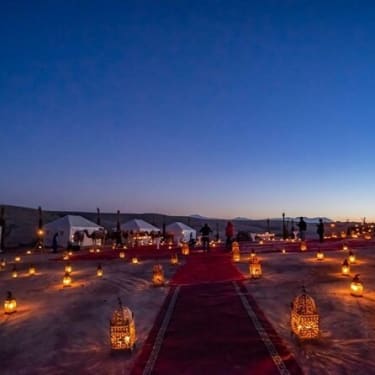
After making the most of your stay in Marrakech on the first day, the next day will be dedicated to an excursion to the spectacular Atlas Mountains. On your return, you can spend some time relaxing in a hammam and recovering from your camel ride.
Excursion to the Atlas Mountains from Marrakech
Booking an excursion to the Atlas Mountains is one of the best things you can do during your stay in Marrakech.
This excursion will take you to breathtaking places such as:
- The Agafay Desert.
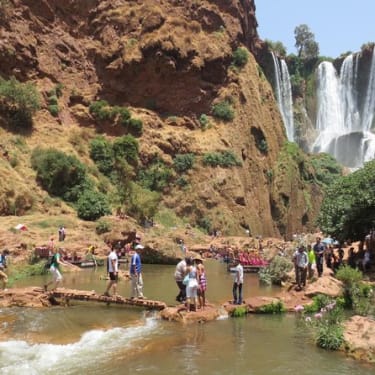
- The Atlas Mountains.
- Villages populated by Berbers, where you can learn about their way of life and ancestral culture.
The meal, included in these excursions, is served in a Berber house so you can see the differences between their cuisine and that of Marrakech.
Enjoy a bath and massage in a hammam
After spending the whole day in the desert, the best thing to do when you return to the city is to relax with a bath and a good massage in a hammam in Marrakech.
A hammam is a traditional Arab bath, and Marrakech has a good selection of these establishments, although I recommend choosing one of those intended for visitors. Although the price is slightly higher than those used by locals, they have the advantage of being mixed and providing everything you need for an unforgettable experience.
Day 3: from the Jewish quarter to the modern area, passing by the Saadian tombs and two palaces

The last day of your stay in Marrakech will be dedicated to some of the monuments you haven't visited yet. Some of them, such as the Saadian Tombs, are truly unmissable, and many of them are included in the guided tour of Marrakech, which I definitely recommend booking to make your trip a complete experience.
Finally, if you have to catch a flight on the same day, here are some tips on how to get from Marrakech to the airport.
Bahia Palace
This palace is one of the sights that no one should miss during their stay in Marrakech: the Bahia Palace. If possible, on your way there, I recommend stopping off at a beautiful and interesting square: the Place des Ferblantiers, full of shops selling tinware.
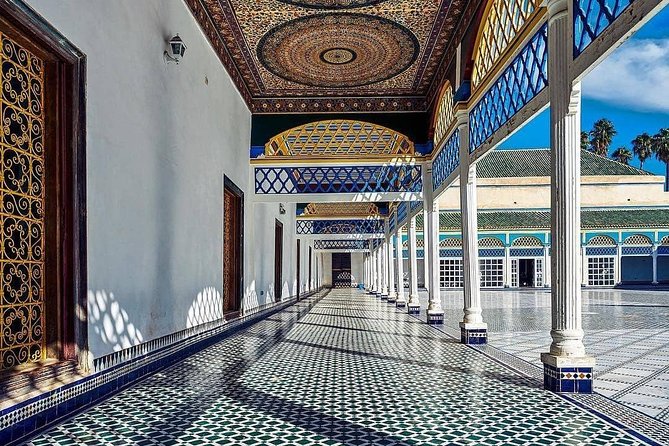
Built at the end of the 19th century, you only have to look at the palace gardens (especially the small inner riad) and the space where the harem was located to understand its importance at the time.
Mellah: the Jewish refuge
A short distance from the palace is the old Jewish quarter of Marrakech. It was built in the 16th century, when groups of Jews expelled from Spain and Portugal found refuge in this city.
Although the Jewish population is now small, the quarter retains an essence that sets it apart from the medina.
Its narrow streets hide some really interesting corners, but I recommend you don't miss the Jewish cemetery and the Salat Alzama synagogue.
Saadian Tombs
To reach these spectacular tombs, it is best to approach from outside the walls and enter through Bab Agnaou, the gate that led from outside the city to the royal kasbah.
The tombs, built by order of Sultan Al Mansur at the end of the 16th century, were forgotten for centuries after being walled up by a later sultan. After being rediscovered in 1917, they have become one of the city's main treasures.
The entire architecture of the complex stands out for its careful design. In the first courtyard are the tombs of secondary figures, such as warriors and servants. One of the buildings surrounding this courtyard houses the most spectacular part of the complex, the so-called Hall of 12 Columns. It is here that the remains of Al Mansur himself rest.
El Badi Palace
Near the tombs and right next to the Royal Palace are the remains of the El Badi Palace. Unfortunately, most of it is in ruins, but it is still worth strolling through its orange grove and the surviving ponds.
Furthermore, from the remains of its walls you can enjoy some of the best views of the city.
Marrakech Museum and Almoravid Qubba
Returning towards the centre of the medina, there are still two interesting short stops before reaching the modern part of the city.
At the first of these stops, the Marrakech Museum, I recommend that you just stop to take a look at its wonderful central courtyard, whose beauty makes it highly recommended.
Nearby is the Almoravid Quobba, a dome-shaped building that is the last example of architecture from that period in the city. Its interior is particularly interesting, as it houses a souk called Souk Foudouq Ouarzazi.
Menara Gardens
The last few hours of your stay in Marrakech will be spent in a couple of areas outside the city centre. The first is the extensive Menara Gardens, the largest in the city.
These gardens, which have eight centuries of history, are a true oasis in the middle of Marrakech. In fact, they are a very popular destination for locals seeking to escape the hustle and bustle of the city streets.
Dining in the modern area
Depending on how much time you have, a good way to end your trip is to walk to the nearby modern area of Marrakech, known as the Gueliz neighbourhood.
This area was built by the French during the protectorate and has its nerve centre in the 16 November square. Several avenues branch off from this square, offering a very different atmosphere to that found in the old city.
You can take the opportunity to have dinner in Gueliz, as it is full of restaurants serving both traditional Moroccan and Western-style food.