
More about: 10 Things to Do near Stonehenge
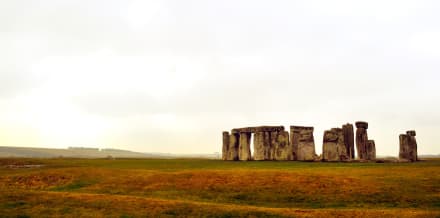
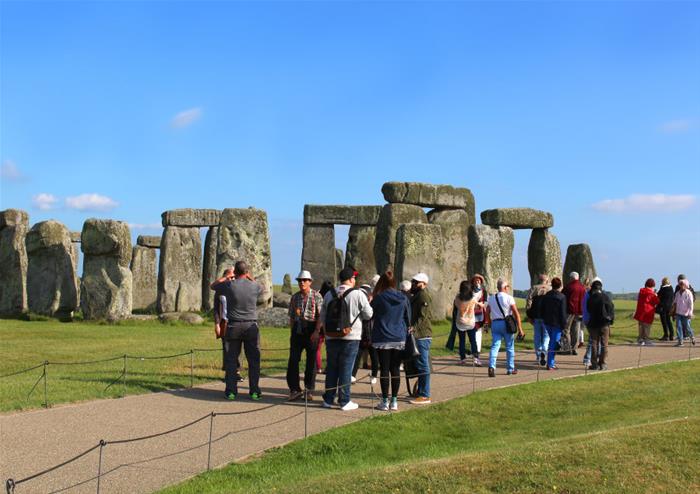
No one would dispute that Stonehenge should be on the list of places to see when travelling to London. However, there are many other nearby attractions that are also well worth a visit, ranging from other prehistoric sites to fascinating towns and cities.
If you have plenty of time, I recommend picking up a map of the area around Stonehenge, which has been designated a World Heritage Site. With that information, try to visit places such as Salisbury, the Neolithic remains at Avebury, Lacock or Old Sarum, amongst others.
1. Discover the world’s largest stone circle at Avebury

Just half an hour separates Stonehenge from this World Heritage Site. The beautiful village of Avebury is known for housing the world’s largest stone circle, its ancient tombs and other remains from the Neolithic and Bronze Ages.
The remains are located within the village and can be visited every day of the year. As well as the stone circle, other highlights include Britain’s largest Neolithic tomb, the nearby Avenue and Silbury Hill, Europe’s largest man-made mound. All this means it is every bit as good as the best tours you can take in London.
Even if you’re a bit tired of archaeological remains, Avebury is still well worth a visit. There you can visit:
- St James’s Church, built in AD 1000, which you can enter for free.
- Avebury Manor, whose gardens are a must-see for those who have already enjoyed London’s parks.
How to get to Avebury
The easiest way to get there is to book a tour to Avebury in advance, as you’ll also be able to explore other incredible villages in the area, always accompanied by an expert local guide, which will help you learn about the place and save you the hassle of making arrangements.
In any case, as well as being able to get there by car (a journey of around 2 hours), Avebury is well connected by train from London. You’ll need to catch a train from Paddington station (there’s an underground station of the same name, and here you can see how to get around on the London Underground ) to Swindon, and from there take bus number 49.
2. Take a stroll around Avebury

If you’ve had the good sense to visit Avebury, you should try to make the most of its charms. In short, it’s much the same as what you do in the British capital when you visit some of London’s hidden gems, beyond the better-known attractions. You can therefore expect that a visit to the stone circle and the museum will take you about an hour and a half. The rest of the time, you can:
- Visit the mansions I mentioned earlier.
- Discover some lesser-known but equally interesting spots such as Windmill Hill, one of the oldest sites in the area. It is thought to have been built around 3675 BC and to have served as a gathering place for festivals and trade. Over time, several burial mounds were constructed on this same elevated site, all of which are well worth a visit.
- The aforementioned Silbury Hill, an artificial hill considered one of the country’s most mysterious prehistoric remains; at 30 metres high, it is the largest man-made mound in Europe.
How to get to the area around Avebury
Actually, the best way to explore the area around Avebury is on foot. Although there is a car park next to Silbury Hill, my recommendation is that you try to get there on foot, just as you would for the rest of the attractions in the area.
3. Stroll through Lacock
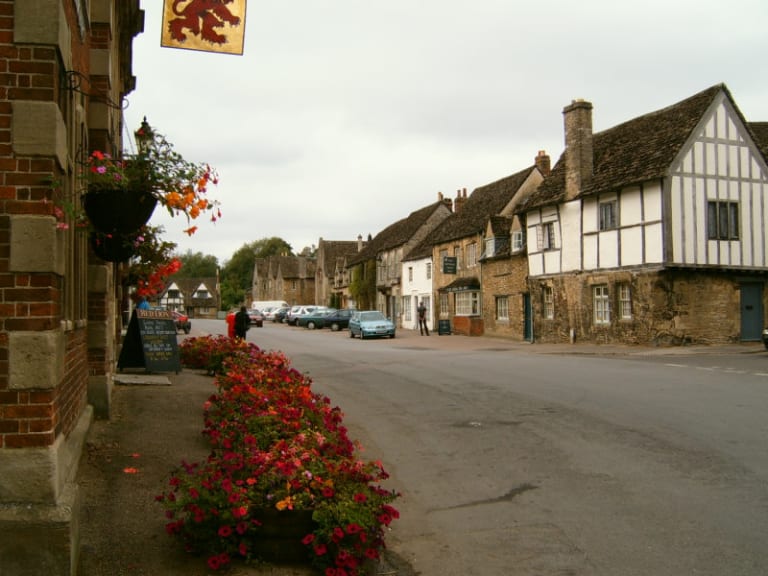
Lacock is one of the most picturesque villages in the whole area and is, in fact, protected by the National Trust, an organisation dedicated to ensuring that England’s places of historical and natural interest remain unspoilt. You may have already seen some images of it, as it was one of the locations for the Harry Potter films. It is, therefore, a good addition to a visit to Harry Potter-related sites in London.
The village is situated in the north of Wiltshire, relatively close to Bath. Its origins date back to the 11th century, although its importance grew two centuries later when the nearby abbey was founded.
Strolling through its streets is the best way to immerse yourself in the typical rural architecture of the south of the country, which blends stone façades with whitewashed ones and half-timbered houses. Although these walks alone make a visit to the village worthwhile, you can always round off your trip by visiting one of its churches, such as St Cyriacus.
How to get to Lacock
If you’re in Bath or travelling there from London, it’s quite easy to reach Lacock, as it’s only about half an hour’s drive away. In that case, I recommend leaving your car in the car park at the entrance to the village and exploring its attractions on foot.
If you’d prefer to travel by public transport, there are several options:
- Train from London to Chippenham and then a bus to Lacock.
- Train to Bath and bus to Lacock.
4. Enjoy the beauty of Bath

Like some of the other places I’ve mentioned, Bath has also been designated a UNESCO World Heritage Site. The city is best known for its Roman baths, built over 2,000 years ago. To do so, they made use of the thermal springs found in the area.
Although it was the Romans who first began using these baths, in the 18th century the city became a meeting place for the London elite seeking to benefit from the properties of the thermal waters.
Other attractions you can visit in the city, and which are included in combined tours to Stonehenge and Bath from London, are:
- Pulteney Bridge.
- Prior Park.
- Bath Abbey.
- Several interesting museums.
How to get to Bath
A high-speed train departs from London Paddington station and covers the journey in just 1 hour and 30 minutes. If you prefer another option, there is a standard train that leaves from Waterloo and takes an hour longer to reach Bath.
The National Express coach company operates a regular service linking London Victoria Station with the city of Bath, but the journey takes 3 hours. That said, the price is considerably lower.
Finally, Bath is included in many organised day trips from London, which you can book here in advance. This is the best option if you want to combine your visit with a trip to Stonehenge.
5. Don’t miss Salisbury and its impressive cathedral
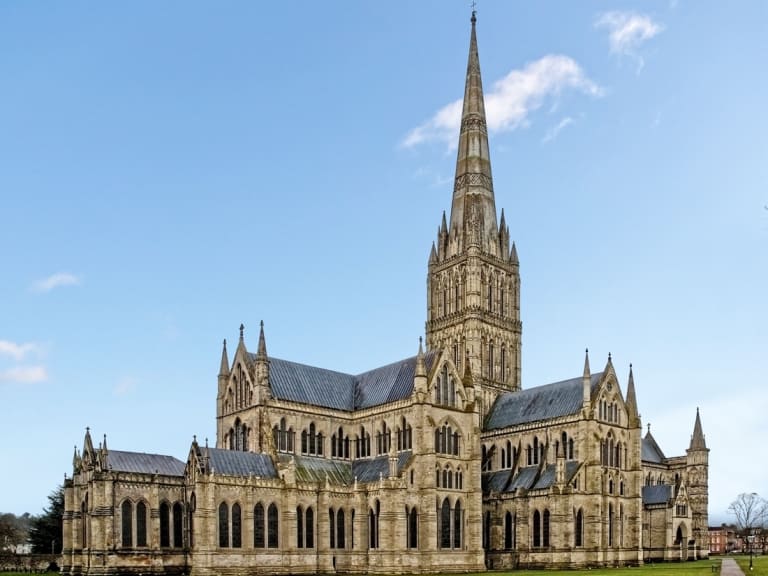
As you’ll have seen in my article on how to get to Stonehenge from London, almost all public transport requires a change in Salisbury, and it’s also included in some of the organised day trips departing from the capital. However you get there, this city offers plenty of reasons to spend a few hours wandering its streets and discovering some of its most iconic spots.
Although simply strolling through the streets of this medieval city makes the visit worthwhile, you should know that:
- Salisbury’s main attraction is its magnificent Cathedral of the Blessed Virgin Mary. Construction of this building began in the early 13th century, and the English Magna Carta is preserved inside.
- It is also worth stopping off at Salisbury Museum, where part of the exhibition is dedicated to Stonehenge, making it the perfect place to delve deeper into the monument’s history.
- Finally, if you’re a fan of the country’s pubs, you mustn’t leave Salisbury without popping into the Haunch of Venison. This pub, which opened as far back as 1320, is every bit as good as those you’ll find on a night out in London, to the extent that a visit is recommended by the prestigious National Inventory of Historic Pub Interiors.
Joaquín’s Traveller Tip
It’s quite easy to reach the Stonehenge megalithic monument from Salisbury. Just look out for the bus called The Stonehenge Tour Bus.
How to get to Salisbury
- Salisbury railway station is well connected to London, making it easy to travel to the town. Trains run frequently from London’s Waterloo station, and the journey takes around an hour and a half.
- Another option for travelling from London to Salisbury is the coach, and there is actually a direct service from Heathrow Airport itself. If you’ve decided to drive, the journey takes around two hours.
- Finally, the most convenient option is to book an organised day trip from London to Stonehenge, such as one that allows you to visit Stonehenge, Bath and Salisbury in a single day.
6. Step back in time at Old Sarum

Just 14 kilometres from Stonehenge, history lovers can visit Old Sarum Hill, considered the birthplace of neighbouring Salisbury.
Old Sarum was first occupied by groups of hunters and later inhabited by some of the earliest farmers. A fortress was built on this site during the Iron Age and, over time, it witnessed the passage of Romans, Normans and Saxons. In total, 5,000 years of human history.
The site, situated on the hill itself, is currently part of English Heritage and is open to the public. A ticket must be purchased.
How to get to Old Sarum
As it is situated just 3 kilometres from Salisbury, it can be reached on foot from the city. Simply head north and take the opportunity to admire the banks of the River Avon and parts of Victoria Park and Hudson’s Field.
7. Discover Amesbury

The town geographically closest to Stonehenge is Amesbury, so much so that many include it among the places to visit when they visit the monument. This small town was founded in 976, although there is evidence that the area has been inhabited for around 10,000 years.
Amesbury is also known for its connection to the legend of King Arthur. It was there, in a convent, that Queen Guinevere took refuge following the king’s death at Camlann. Near this town, one of the most opulent Bronze Age cemeteries was discovered, where the remains of two men (possibly nobles of the time) were found surrounded by over 100 objects, such as gold earrings and copper knives. One of them is known by the nickname ‘King of Stonehenge’.
Strolling around the town, you can enjoy a unique view of the River Avon until you reach the jewel in Amesbury’s crown: its ancient abbey, now converted into the Church of St Mary and St Melor. The building dates from the 10th century and was the burial place of Eleanor of Provence, wife of Henry III.
How to get to Amesbury
Although the most convenient option is to join one of the tours running from London to Stonehenge, you also have the option of taking one of the National Express coaches.
It is also easy to get there from Salisbury, as you simply need to catch one of the coaches connecting this town with Stonehenge.
8. Delve into history at Durrington and Woodhenge

Just 3 kilometres from Stonehenge lies Woodhenge, a Neolithic wooden monument dating from around 2500 BC, making it practically contemporary with the monument.
Woodhenge consisted of six ovals of upright posts, surrounded by a ditch and a bank. The structure was built in such a way that it aligned with the sunrise during the summer solstice at Stonehenge. This wooden monument is now part of the Stonehenge and Avebury World Heritage Site, as is the nearby South Circle of Durrington Walls.
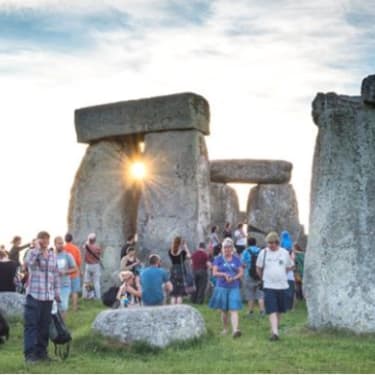
It is aligned with the sunrise on the winter solstice (another of the best times to visit Stonehenge), so it is thought to have complemented Woodhenge. It is known that many people came to Durrington for winter celebrations even before the wooden structure was erected.
How to get to Durrington and Woodhenge
Both monuments can be visited very easily from Amesbury or Stonehenge, without needing to arrange any transport.
9. Discover Castle Combe, England’s prettiest village
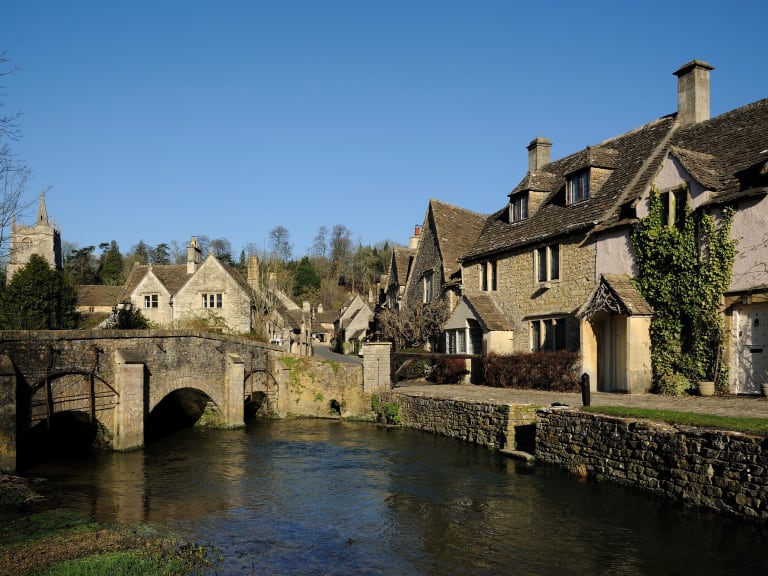
Castle Combe is recognised by many as the prettiest village in England. It is a very small village, with just around 350 inhabitants, where a sense of tranquillity reigns, broken only by the visitors who come to explore it.
The village consists of just one main street, but the beauty of its buildings will make you want to photograph them one by one. Its location, amidst wooded hills, also plays a huge part in giving it a magical atmosphere.
As for the places you should visit during your stay, the highlights include:
- The small Church of St Andrew, with a history dating back at least to the 13th century.
- The White Hart, a pub that has been open for over five centuries.
- The Market Cross, in the market square.
- The village also boasts a five-star hotel (Manor House Hotel) with a Michelin-starred restaurant. This hotel is housed in a 14th-century building and its gardens cover over 140 hectares.
How to get to Castle Combe
One of the village’s attractions is its seclusion from major transport routes. Whilst this has allowed its streets to remain virtually unchanged, it does make it somewhat difficult to reach.
The best way to get there if you don’t have a car is to take the train from London to Chippenham, which is about 5 kilometres away, or to Bath, about 10 kilometres away. From both towns you can take a taxi or, if you’re in Chippenham, a bus.
10. Prehistory, the Middle Ages and the Industrial Era in Devizes

It’s hard to believe that such a small town boasts over 500 listed buildings of historical or artistic interest. This town, Devizes, is home to everything from Neolithic remains to industrial-era buildings, with a medieval layer evident in every street.
To begin with, Devizes is one of the most important centres for learning about the history of Stonehenge and the other sites in the area, as it is home to the Wiltshire Museum, which displays all manner of artefacts found during the various excavations carried out at Stonehenge and Avebury. There are also finds from Bush Barrow.
Once outside the museum, it is essential to:
- Take a stroll through the Market Place, a crescent-shaped square where a large open-air market is held every Thursday. From this very square, you can see the village brewery, crowned by a Victorian tower.
- Visit the neoclassical town hall, as well as the various Georgian houses.
- Nearby lies one of the most impressive works from the early industrial era: the Kennet and Avon Canal.
How to get to Devizes
There are plenty of buses from London to Devizes. You can find the timetables here. Currently, there is no train station in the town.