

More about: 11 Things You Can´t Miss in Westminster Abbey
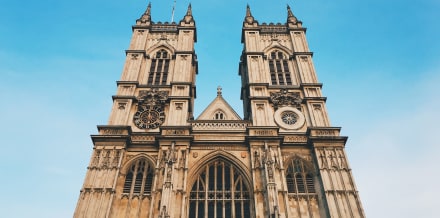
Westminster Abbey is England’s most significant and oldest religious building. A national sanctuary that has witnessed numerous royal coronations over the centuries and is home to the tombs of members of the royal family and great British figures.
A living piece of the country’s history and a Gothic architectural gem, its interior houses a wealth of beautiful works of art. In short, it’s one of the must-see attractions in London , whether you’re visiting for just two days or staying for a week.
If your plans include visiting this English icon, after buying your tickets to Westminster Abbey and checking the opening times, I encourage you to read this post where you’ll find a sneak peek at 11 wonderful sights to see at Westminster Abbey.
1. The Lady Chapel

At the eastern end of Westminster Abbey you’ll find The Lady Chapel, one of those small artistic treasures of immense beauty found within churches that never fail to delight visitors.
Dedicated to the Virgin Mary, its construction began in the 16th century, during the reign of Henry VII of Tudor, and it is highly regarded within the context of English medieval architecture as the ultimate masterpiece.
Walking through The Lady Chapel means you cannot take your eyes off the fan-vaulted ceiling from which carved golden pendants hang. A beautiful example of late medieval architecture that fits perfectly with the rest of the chapel’s décor.
Also striking are the colourful flags bearing heraldic motifs on the stiles adorning both sides of The Lady Chapel, which belong to the Knights of the Order of the Bath who have met here since the 18th century.
Other elements that tastefully decorate the chapel are the magnificent stained-glass windows, although these are not original as the original ones were destroyed during the Restoration period. They were installed in the 20th century and depict insignia of the fighter squadrons from the Battle of Britain in 1940 and emblems associated with the Virgin Mary.
Completing this unique space are the more than one hundred statues of saints surrounding the chapel and symbols such as the English pawn, the Tudor rose, the fleur-de-lis and the Welsh dragon.
2. The Coronation Chair

St George’s Chapel is home to one of the world’s most famous pieces of furniture: The Coronation Chair. A 14th-century medieval chair (the oldest piece of furniture in the country!) on which more than 26 monarchs have been crowned, including the famous Henry VIII, Elizabeth I and the current Queen Elizabeth II of England.
King Edward I had it made to hold the Stone of Scone (the rock the Scots used to crown their kings in the Middle Ages), and from then on it was to be used for the coronations of English sovereigns.
The significance of the Stone of Scone lies in the fact that, according to the legend upheld by the kingdoms of Scotland and England, it was the very stone on which Jacob rested his head when he dreamt of Jacob’s Ladder, an episode recounted in the Book of Genesis.
In 1996, the British government returned the stone to Scotland and it can currently be viewed at Edinburgh Castle, although it will be loaned to London whenever a new coronation takes place.
As for King Edward I’s coronation chair, it remains on display at Westminster Abbey and continues to be used for the purpose for which it was carved.
3. The Royal Tombs

As well as hosting the coronations of numerous kings since the 10th century, Westminster Abbey is also the burial place for many of them.
As you stroll through the Lady Chapel, you can see the tombs of many monarchs, such as Henry VII and Elizabeth of York, Queen Mary I and her sister Elizabeth I, Queen Mary Stuart, Edward V and Richard, Duke of York (the Princes in the Tower), and Charles II, amongst many others.
If you’re a fan of historical novels or films, many of these names will surely ring a bell, as their lives have been brought to the big screen on numerous occasions in recent years.
4. The Poets’ Corner

As you reach the north side of Westminster Abbey, you’ll see one of its most popular areas, particularly for literature lovers who make a pilgrimage here. This is the so-called Poets’ Corner, where over a hundred literary figures are buried or honoured.
A tradition that began in the 15th century with the burial of the poet Geoffrey Chaucer (author of “The Canterbury Tales”), followed by many other renowned writers such as Charles Dickens, Rudyard Kipling, Samuel Johnson and Thomas Hardy.
Other iconic figures of English literature, such as William Shakespeare, C.S. Lewis, Jane Austen and the Brontë sisters, have memorials in their honour in the Poets’ Corner.
5. The Tomb of the Unknown Soldier

Heading now towards the western end of Westminster Abbey, you will find the Tomb of the Unknown Soldier, where an unidentified soldier who fought in the First World War (1914–1918) lies. His remains were brought from France to England to be buried here, amongst kings, because, as the inscription reads: ‘he did well by God and his country’.
During the Great War, almost a million British soldiers lost their lives in the conflict and many of them could not be identified. This tomb in Westminster Abbey is intended to pay tribute to them all. It is undoubtedly one of the most moving places you will encounter during your visit to the Abbey.
6. Pyx Chamber

One of the oldest parts of Westminster Abbey is the Pyx Chamber, in the East Cloister of the abbey.
Stepping inside is like taking an exciting journey back in time to the church’s origins in the 11th century, when King Edward ‘the Confessor’ sought to rebuild the previous abbey on the site. From those years, the Pyx Chamber still retains several 11th-century tiles and its medieval tiled floor.
In the past, the British Crown used this chamber as a treasury, and it housed not only valuable silver and gold items but also extremely important documents and foreign policy treaties, as at that time this small room in Westminster Abbey was considered the safest in the city.
7. The Choir

During your tour of Westminster Abbey, you can also admire the choir stalls. The original ones dated from the Middle Ages and were replaced in the 18th century. The current one is from the 19th century, but the black-and-white marble floor in this part of the church is indeed original from the 17th century.
This is where the members of the church choir sing, a tradition dating back to the 10th century and still celebrated today. In fact, choral services are often held in the church, which anyone can attend.
If you enjoy sacred music, don’t hesitate to check the event timetables to attend, as it is a very special opportunity to experience the true majesty and spirituality of Westminster Abbey beyond its more touristy side.
8. The Cloisters

The Cloisters are one of the most beautiful parts you’ll see during your tour of Westminster Abbey. They convey a great sense of peace and serenity. Walking through the cloister’s corridors, you’ll feel, for a moment, as though time has stood still.
They date from the 13th and 14th centuries, and the monks of the Benedictine Order used them for prayer, meditation, exercise or rest, and also to move between the various monastic buildings that made up Westminster Abbey, as the Cloisters served as a link between them.
As a point of interest, the first twelve monks to arrive at Westminster were brought there by Saint Dunstan (then Bishop of London) in the 9th century and remained here until King Henry VIII dissolved the monastery in the 16th century.
9. The Chapter House

Located in the East Cloister, this beautiful room served as a meeting place for the monks and the abbot when they wished to discuss the day’s affairs, read the ‘Rule of St Benedict’ or pray, amongst other duties.
In the 13th century, the King’s Great Council also met in the Chapter House, meaning that English parliamentarianism began in this part of Westminster Abbey. And later, in the 14th century, the House of Commons also met here on several occasions before moving to the Abbey Refectory
If you enjoy art, you’ll particularly appreciate the octagonal architecture of the Chapter House during this part of the tour, where a pillar rises towards the vaulted ceiling, fanning out as it rises. Also take note of the murals depicting scenes from the Apocalypse and the stained-glass windows, which are a marvel.
Before you leave, don’t forget to admire the wooden door of the Chapter House, believed to be the oldest in Britain. Amazing!
10. The Queen’s Diamond Jubilee Galleries

During your visit to Westminster Abbey, don’t miss The Queen’s Diamond Jubilee Galleries, a space within the medieval triforium above the nave of the church that has remained hidden from visitors for over seven centuries.
It is a beautiful museum with stunning views of the church interior and Westminster Palace, which tells the thousand-year history of Westminster Abbey from its origins through hundreds of objects of great historical value.
To enter The Queen’s Diamond Jubilee Galleries, you must do so at a specific time. You’ll find more information on this in the post ‘Westminster Abbey Opening Hours ’.
11. Collage Garden

The College Garden at Westminster Abbey was where the Benedictine monks used to tend their vegetable plots.
It is around a thousand years old, making it the oldest park in England. A place like this is well worth a visit, especially when the weather in London is milder and the gardens of the College Garden are at their most colourful and beautiful.
The best time to visit this park is during the London spring (between March and May), although summer in London is also a good time. One of my favourite spots inside Westminster Abbey!