

Lisbon in 3 Days: tips, what to see, and much more

If we have three days to visit Lisbon, we will have time to see the main monuments and also take a trip to the surrounding area.
Lisbon in 3 Days: tips, what to see, and much more

Other popular activities in Lisbon

More about: Lisbon in 3 Days: tips, what to see, and much more

If you are planning a three-day trip to Lisbon, you should know what is best to see in Lisbon in that time. Luckily, 72 hours will give us time to see the essentials of the Portuguese capital and also take a trip to one of the most important places in the city's surroundings. To help you enjoy your trip, here is a three-day itinerary designed to make the most of the Portuguese city.

Day 1: Lisbon's historic centre: Alfama, Baixa, Chiado and Bairro Alto neighbourhoods
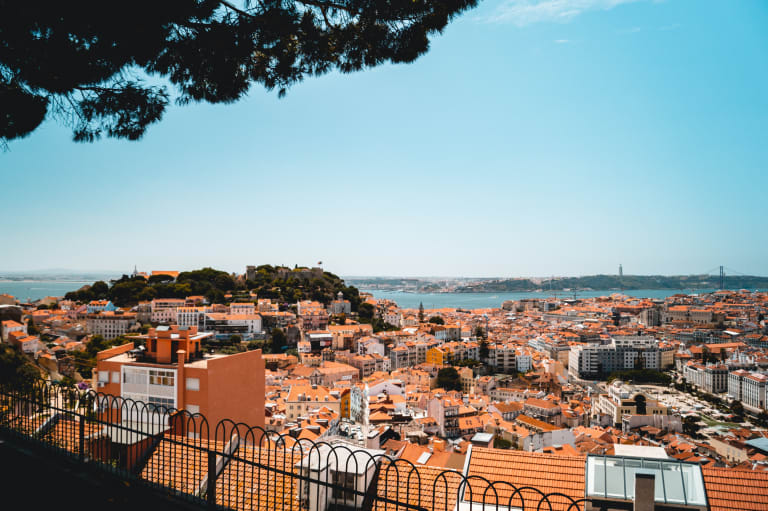
Alfama neighbourhood| ©Louis Droege

We will spend the first day of our trip to Lisbon getting to know the historic centre of the city, which consists of the Alfama, Baixa, Chiado and Barrio Alto neighbourhoods.

These neighbourhoods are home to many of the city's main tourist attractions and can be explored on foot in a single day. Below, I will share with you the essential places to see in each of them:

Morning in the Alfama neighbourhood

The ideal place to start our visit to Lisbon is in the Alfama neighbourhood. This neighbourhood lies beneath St. George's Castle, and its steep streets exude the authentic essence of Lisbon. Originally a fishing neighbourhood, today it has become the most authentic area of the capital and the birthplace of fado, Portugal's most popular musical genre.

This neighbourhood has several must-see attractions:

  • Its viewpoints, such as Portas do Sol and Santa Lucía, which offer beautiful and comprehensive views of the city.
  • The Castle of São Jorge.
  • The National Pantheon.
  • Lisbon Cathedral.

Booking a guided tour of Alfama is the best way to soak up Lisbon's culture and learn about its history, the best places to visit and even the origins of Portuguese fado.

Book a guided tour of Alfama

Walk through Baixa and Chiado

Pedro IV Square in Lisbon| ©Thomas

After spending the morning in the Alfama neighbourhood, it's time to visit the Baixa and Chiado neighbourhoods. From Alfama, you can walk down and start exploring these neighbourhoods at Pedro IV Square, next to which is the Baixa Market, where you can grab a bite to eat before walking down Rua Augusta to Commerce Square. This shopping street connects the two most important squares in Lisbon.

Praça do Comércio is one of the city's nerve centres. It is accessed by passing through the Rua Augusta Arch, which you can climb to reach its viewpoint. In the square, there is a statue of José I and a pier from which you can enjoy views of the Tagus River.

An excellent way to get to know the Chiado neighbourhood is to book a tour of Lisbon, which covers this area as well as the city's main monuments. Oh, and it also includes wine tasting, tapas and pastéis de nata. Delicious!

Book a tour of Lisbon

End the day on a high note

In the afternoon, we can retrace our steps along Rua do Ouro to the Santa Justa lift. This is an elevator that reaches a 45-metre-high walkway connecting the Baixa and Chiado neighbourhoods. You can go up to its terrace, which serves as a viewpoint, before exiting at the top and visiting the Carmo Convent.

The convent church was left in ruins after the 1755 earthquake and can now be visited, offering a very special view. It is rare to see a Gothic church whose ceiling is the sky itself. The convent also houses the Do Carmo Archaeological Museum.

The streets adjacent to the convent belong to Lisbon's Bairro Alto neighbourhood. This is a trendy neighbourhood full of life and activity, and it is the ideal place to have dinner and end the day enjoying the city's nightlife.

Book a guided tour of Lisbon

Day 2: Excursion to the town of Sintra

Town of Sintra| ©Drew Bae

The second day of our stay in Lisbon can be spent on a day trip outside the city. The destination is well worth spending almost a whole day on. It is the town of Sintra, a complex of palaces declared a World Heritage Site in 1995.

This link provides all the information you need to know to get from Lisbon to Sintra, although in my opinion it is best to book an excursion to Sintra from Lisbon. There is a lot to see in the town of Sintra, so it will take almost a whole day to explore it. The main monuments you should visit are:

Pena Palace

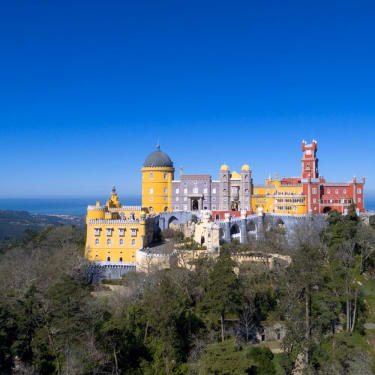
The Pena Palace is the best known and most visited monument in Sintra thanks to its architectural variety and striking colours. The building is relatively modern, as it was built in the 19th century, and is considered one of the most beautiful palaces in Europe. Eclecticism is one of the hallmarks of the Pena Palace due to its mixture of styles such as Romanesque, Mudejar and even Gothic.

Although the exterior is very charming and the royal gardens surrounding it are worth seeing, the interior of the palace can also be visited and is spectacular, so I recommend buying a ticket for the Pena Palace.

Buy your ticket for the Pena Palace

Quinta da Regaleira

Quinta da Regaleira is another spectacular mansion in the Sintra complex. Historically linked to Masonic rites, it is a place full of symbolism and mystery, so it is highly recommended to visit it with a guide to discover all its secrets.

The initiation well in its gardens is one of its most impressive features. It is an inverted tower, hence the name "well", with a spiral staircase running through its nine floors.

Book an excursion to Sintra, Cascais and Regaleira from Lisbon

The National Palace of Sintra

The National Palace of Sintra| ©Diego Delso

In the centre of Sintra and visible from almost the entire town is the National Palace. It is a peculiar Arabic-style building crowned by two unusual chimneys. In this case, the main attraction is inside, as its rooms have mosaics made up of very well-preserved tiles.

The Palace of Monserrate

The Monserrate Palace is less well known than the other palaces, but this has earned it the reputation of being the hidden gem of Sintra. The building's architecture is clearly influenced by the Arabic style and it has a spectacular garden with more than 3,000 species of exotic plants.

These are the essential monuments of Sintra , but there are others that are worth visiting if you have time, such as the Castelo dos Mouros, the Convento dos Capuchos or the Chalet and Garden of the Countess.

Book an excursion to Sintra

Day 3: The Belém neighbourhood in depth

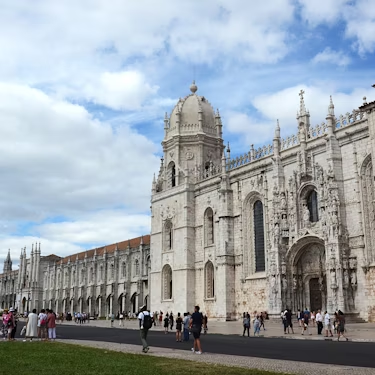
The Jerónimos Monastery| ©Minh TRAN

Technically, Belém is not a neighbourhood of Lisbon. It was once a separate town, but the growth of the capital eventually absorbed this area, which is home to some of the best-known monuments in the city and the whole country.

On the third and final day in Lisbon, we will explore this area in depth and visit the Jerónimos Monastery and the Belém Tower, two of Lisbon's most important symbols, as well as other monuments and experiences typical of this historic area.

The best way to get there is to take tram number 15 from the city centre. It takes about 20 minutes. There is a stop at Praça do Comércio, and near the square are the docks where you can take a boat trip along the Tagus River as an alternative.

Book a guided tour of Belém

Jerónimos Monastery

The first and most important place to visit in Belém is the impressive Jerónimos Monastery. I say first because it is the most visited monument in Lisbon and, between the queues and everything there is to see in the complex, it is easy to spend most of the day there. However, it is well worth the time you spend there.

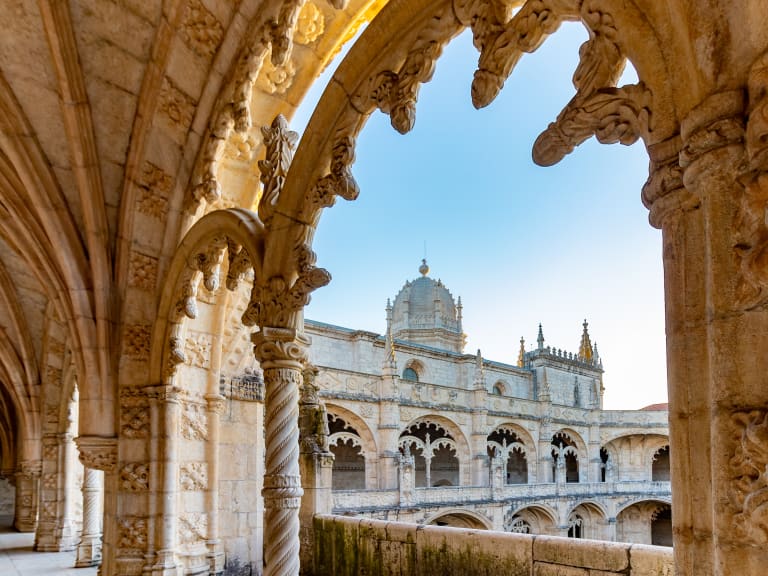
The monastery was declared a World Heritage Site thanks to its architectural and artistic value. Its cloister and church were the result of Portugal's golden age of discovery, which is reflected in the magnificence of the place.

Booking tickets to the Jerónimos Monastery in advance is almost mandatory, due to the number of people who want to visit it. The entrance fee is €17 and it is open every day of the week except Mondays.

Book tickets to the Jerónimos Monastery

Taste the pastries of Belém

After visiting the monastery, it's time to sample one of Belém's most famous traditions: its pastries. These puff pastries with cream filling were made by the Hieronymite monks and can be sampled throughout Lisbon. However, the best place to try them is at the original factory, located right next to the Jerónimos Monastery.

After eating and recharging your batteries, it's almost obligatory to try these pastries with a coffee if you want to experience Lisbon to the full.

Book tickets to the Jerónimos Monastery

Monument to the Discoveries

This spectacular 50-metre-high monument was built in 1960 to commemorate the 500th anniversary of the death of Henry the Navigator and as a tribute to all the adventurers and explorers who shaped the history of Portugal. It is located on the banks of the Tagus River, and you only have to cross the wide avenue in front of the monastery to get there.

Book a guided tour of Belém

Belém Tower

Belém Tower| ©Jan Krutisch

The Belém Tower is one of the symbols of Lisbon. From the Monument to the Discoveries, we just have to follow Avenida Brasilia westwards, away from the monastery, to get there. It takes 5 minutes to reach its gardens, and we will find the tower right next to the river.

In fact, this small fort juts out into the Tagus and, in addition to its defensive role, served as a prison and a lighthouse. Its architecture is quite unusual for this type of construction, and you can go inside to visit the dungeons and the roof terrace with views of the river.

From the edge of the tower, there are spectacular views of the river and the 25 de Abril Bridge, the longest suspension bridge in Europe.

Museums of Belém

If, after seeing these monuments, you still have time and want to see more, Belém offers the chance to visit its numerous museums. The options are:

  • The Carriage Museum.
  • The Berardo Contemporary Art Museum.
  • The Electricity Museum.
  • The Museum of Popular Art.
  • The National Archaeology Museum of Lisbon.

The latter is my recommendation, as it is located in the east wing of the Jerónimos Monastery and houses Portugal's most important archaeological collection, but, as you can see, the Belém neighbourhood has something for everyone.

The best way to end our trip to Lisbon is to attend a fado concert for a 100% Portuguese experience.

Book tickets for a fado concert

Reviews from other travellers

4.6
· 3175 Reviews
  • N
    N.
    5
    (0 Reviews)
    Superb architecture. Digital entrance and no queues. I enjoyed the refectory, although I would have liked a little more spot lighting.
  • L
    L.
    5
    (0 Reviews)
    Magical and serene cloister. Children in wheelchairs well looked after. Round digital entrance. Refectory a little less luminous, but good.
  • J
    J.
    5
    (0 Reviews)
    Pure heritage with no stress. The cloister speaks for itself. Ticket always on the mobile. Dim light in the refectory brings mysticism.
  • E
    E.
    5
    (0 Reviews)
    Cloister, full of symbolism and silence. Immediate entry, no extra charge. Refectory somewhat darker, but very authentic.
  • Y
    Y.
    5
    (0 Reviews)
    Magnificent Manueline style, calm visit in the afternoon. Very comfortable digital entrance. Refectory a bit gloomy, but nice.